There's nothing to see here, folks
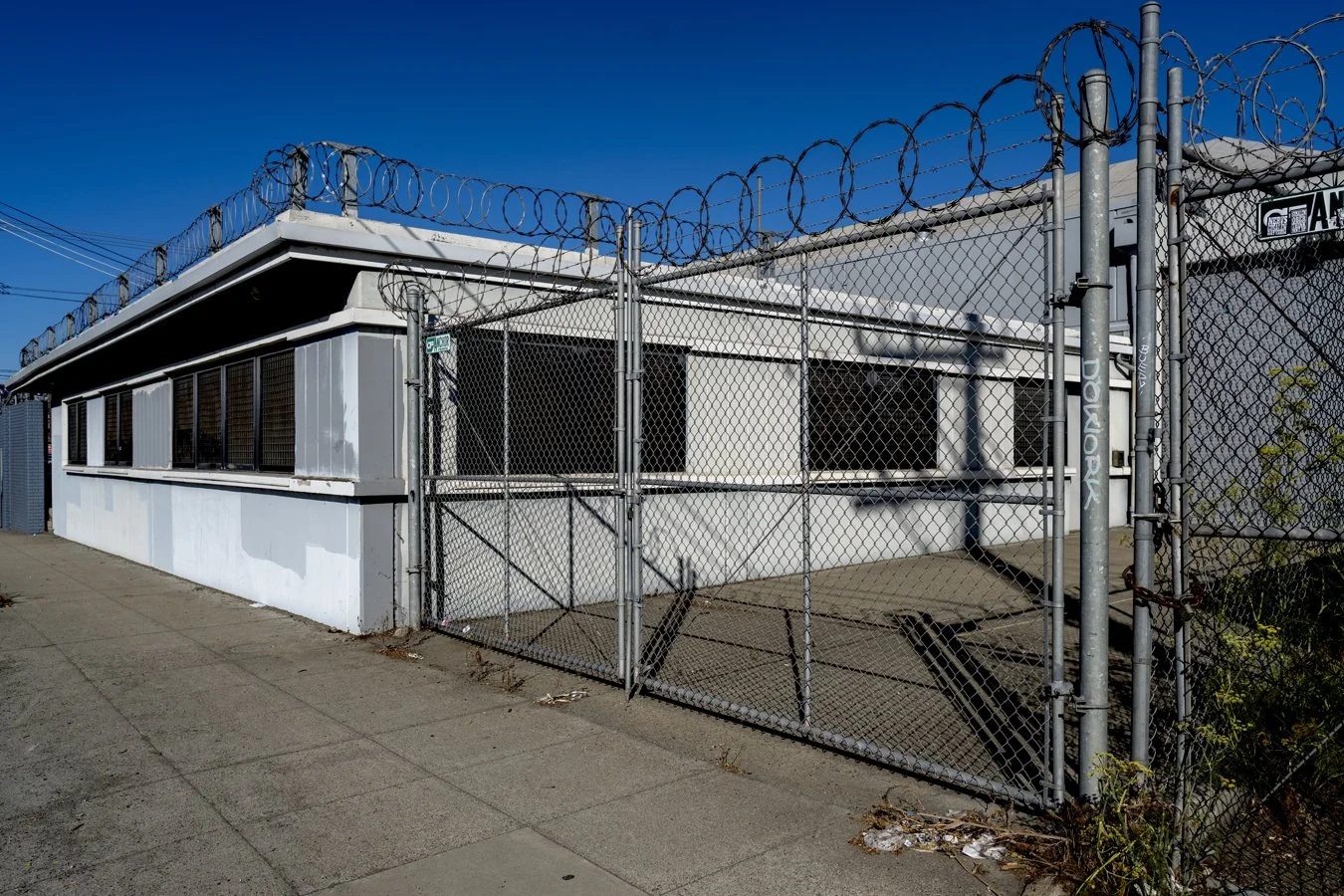
What is the mission of anonymous-looking urban buildings?
Stealth-mode buildings discourage interaction. And most businesses seek just the opposite, choosing to build brand awareness and customer engagement. Yet, San Francisco’s Bayshore, an industrial enclave within the larger Bayview neighborhood, is thick with gray, unnamed structures that aspire to anonymity. Razor-wire fences, metal-barred windows, and glaring motion-activated lights are the most memorable features of these mini-fortresses.
We’re meant to conclude that there’s “nothing to see here.” But it’s probably just the opposite. These days we assume this bunker mentality is mandated by their lawyers or insurers. Even small businesses take maximal security measures, regardless of their actual risk or potential liabilities. Are hostile looking buildings simply physical shelters or the expression of a company’s dark view about everyone lurking beyond their gates? In my view, this safety posture vibe sows distrust and alienation.
I’m at work on a documentary project that explores urban industrial areas, but I’m not intending to celebrate their often hostile vibe. On the contrary, I’m aiming to expose and explain it, and reveal the weirdness and humor I find in these strangely compelling spaces. I’m sharing some of this new work on Instagram, and there’s much more yet to come. Let me know if you have any thoughts or ideas you’d like me to consider.
Fear and Loathing in Eagle Pass, Texas
Eagle Pass, Texas is a flashpoint in America’s immigration controversy. I came there to deepen my understanding of the issues and see how our policies were impacting people.

The Big Beautiful, Unfinished Wall in Eagle Pass, Texas
A year ago, I rolled into Eagle Pass, a town on the Rio Grande, full of apprehension about Texas and the immigration crisis. My friend David, another ex-journo, invited me to accompany him to this tiny town that’s become a flashpoint in the militarized effort to prevent immigrants from crossing our southern border.
A year ago, the political rhetoric was toxic. “I have already declared an invasion,” declared Texas Gov. Greg Abbott, who militarized the area for his “Operation Lone Star.” One of his first actions was to shut down Shelby Park, a public space across the river from the Mexican city of Piedras Negras.
We found the riverside park fortified by shipping containers, ensnared in concertina wire, patrolled by a handful of National Guard troops and state police, along with a smattering of helicopters, tents, Humvees, SUVs, and pickup trucks. Later, Abbott or his advisers dubbed this otherwise drab park Camp Eagle. Abbott boasted of his action, “The only thing we are not doing is we’re not shooting people who come across the border because, of course, the Biden administration would charge us with murder.”
Nearby, of course, was the famously unfinished border wall, a project initiated to curb illegal immigration during the first Trump administration. Trump termed it a “big, beautiful wall,” but its design and construction have been marred by controversy and criticism, with many arguing that it is an ineffective and costly solution to the immigration issue. The rusty steel and cement wall remains a potent symbol of the immigration debate, and we were eager to gauge its impact.
David’s focus was on the human stories behind the crisis. He met and photographed immigrants with word tattoos—often a visually and emotionally powerful experience. He wrote a terrific article about this quest for the Atlantic called “The Words People Write on Their Skin.”
My journey to Eagle Pass was fueled by a desire to deepen my understanding and document a situation that had become hyper-politicized. As David’s wingman, I was also there to support his mission. Our time in Piedras Negras, a place with a far mellower atmosphere, provided another perspective on the National Guard’s intense yet makeshift efforts.
I cannot abide hostility toward immigrants, no matter their legal status. Trump’s assertion that “Illegal immigration is poisoning the blood of our nation” is racist bile meant to stir up hostility toward people who are desperate for a better life. More to come? Perhaps.
Here are a selection of the images. One of them, “Big Beautiful Wall,” a diptych, was published last year in a photo book called The Double City.

A view of Shelby Park in Eagle Pass, from across the Rio Grande in Piedras Negras, Mexico, in April 2024.
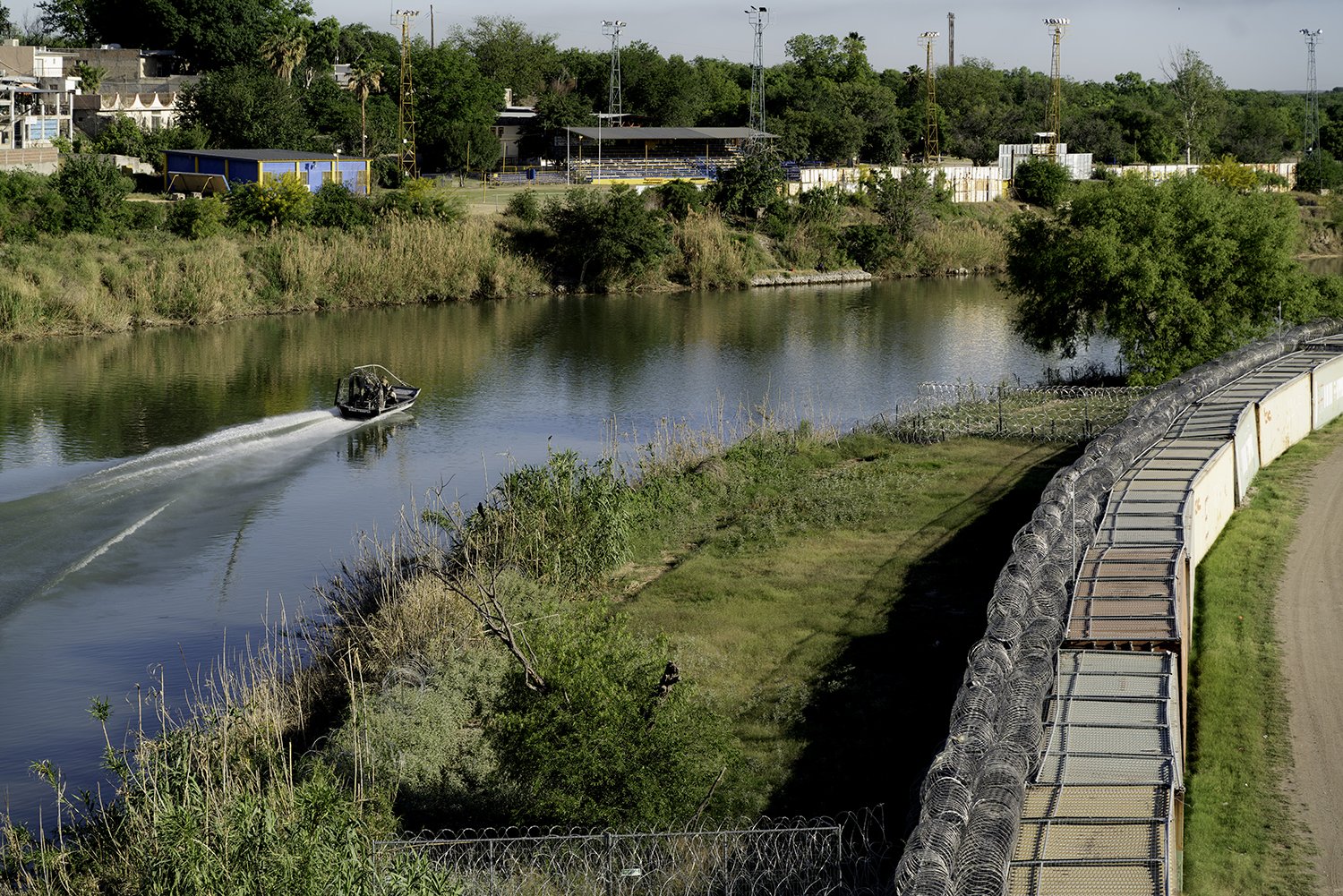
A patrol boat watches for immigrants on the Rio Grande between Eagle Pass, Texas and Piedras Negras, Mexico, in April 2024.

A National Guard soldier allows a truck to enter recently militarized Shelby Park one night in April, 2024.

A close-up of a National Guard Humvee inside Shelby Park in Eagle Pass, Texas in April, 2024.
In a Dark Time ...

High Definition, shot South of Market in S.F. during the Pandemic.
“In a dark time, the eye begins to see” - Theodore Roethke, American poet
I’ve always admired Roethke’s sentiment, and now that we’re living through a dark time, like everyone else, I’m putting that idea to the test. But what does that idea mean exactly? As a former journalist, I tend to take a critical look at my surroundings both in good times and in bad. In reviewing my Cerrado series images, I see what’s resonating with me now, and it’s not watching sea lions on Fisherman's Wharf—it’s what’s happening to my fellow citizens and our city.
To see clearly in a dark time, one must be willing to accept what they see, which is perhaps the biggest challenge of all. I recently posted a handful of images in a social media group where the idea is to share art we’re producing during the Pandemic. Unsurprisingly, on a spectrum of serious-to-joyful, joyful images are the most warmly received. Reassurance is the priority.
Unfortunately, reassurance is not what I’m seeing, feeling, or experiencing in the 47 square miles of my city. At least, not now. However, I aim to capture beauty everywhere, even if it highlights decay. This is an evolving story and I intend to evolve with it. Stay safe, friends.
Game Faces

A jaw dropping experience for these gamers!
Gamers may know when it’s late, but it’s hard to tell by their demeanor. Hours fly by and they’re leaning in with a laser-like focus. For gamers, the experience is much more than virtual.
Gamers I’ve met are usually joyful and aren’t easily distracted. These images from local Esports tournaments focus on gamers — and gamer culture. Most of the players are participating in Smash tournaments — essentially an arcade-style game held in venues ranging from college meeting rooms to sports bars or even Esports arenas built in converted storefronts or office buildings. A gamer (most are in their 20s) may pay $5 to $10 to compete in a tournament that pays the winner anywhere from $50 to $250.
One question that interests me is how does face-to-face social gaming differ from the experience of video gaming in isolation?
Game Faces is an ongoing series shot in Oakland and San Francisco. I want to thank the players and venues who have helped make this exploration possible.
What's Clicking?
2021
In November, a photo called “Take Out” from my Cerrado series was juried into a group photography exhibition called Yellow, at Oakland’s Gray Loft Gallery. My thanks to Ann Jastrab, executive director of the Center for Photographic Arts in Carmel, CA., who selected the images, and to Jan Watten, founder and curator of Gray Loft. and to all of the participating photographers.
In January and February, a Bay Area Photographers Collective group exhibition called Magnetic Pull was installed at S.F.’s Arc Gallery & Studios. The exhibition curators posed the intriguing question of whether a group influences the artistic efforts of its individual members. I think so! Daniel Nevers and Jennifer Brandon, the show curators, selected three images from my Game Faces series. The work is viewable here.
2020
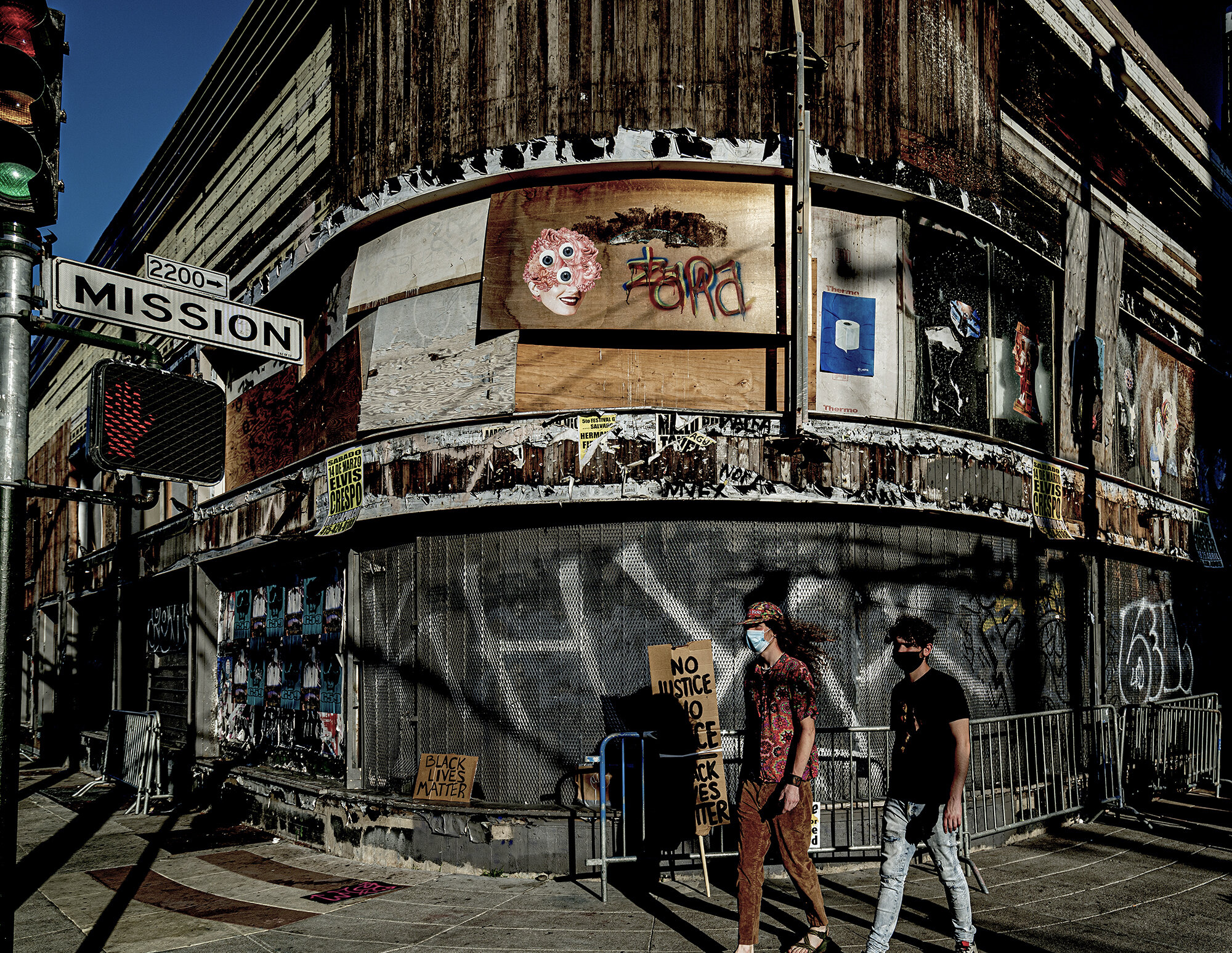
In September, a photo from my Cerrado series called 2200 Mission Street (just above on right) appeared in the Thriving-in-Place exhibition at the Abrams Claghorn Gallery in Albany, CA. The image, shot in early June, features two men en route to a Black Lives Matter protest in San Francisco’s Mission District. A big thanks to the curators, Gene Dominique and Becky Jaffe.
In June, I was named a finalist for the FOCUS photo l.a. Summer 2020 exhibition. Cocktail Hour, from my current series, Cerrado, was featured in a virtual FOCUS installation called Virtual Collect + Connect Photo L.A. 2020 and a live exhibition (postponed due to the pandemic) at Elizabeth Houston Gallery, NYC. Many thanks to the judges. My fingers are crossed that I’ll be able to attend the live exhibition in person.
In January, I learned of an award highlighting a piece from an earlier series. “I think one of the most important lessons to learn as a photographer is to know why you are using color. If you are going to shoot in color, light the shot for color and have the color be a fundamental element of the photograph. This lesson is clearly not lost on Rusty Weston, who offers us a saturated delight of color in Hesitation.” This comment by a curator named ‘Same Source’ is from an article explaining why my photo Hesitation earned first place in an L.A. Photo Curator competition in January called “No Happy Accidents.”
The curators kindly interviewed me about the photograph, which gave me a chance to explain why I shoot in color and what I look for in a composition. Hesitation featured Eilyn Escalante — part of my Unrealized series.
2019
In Sept - Oct. 2019, three images from my series Game Faces appeared as a triptych in the Bay Area Photographers Collective 20th Anniversary Exhibition, a curated group show called Marking Time at the Harvey Milk Photo Center in San Francisco.
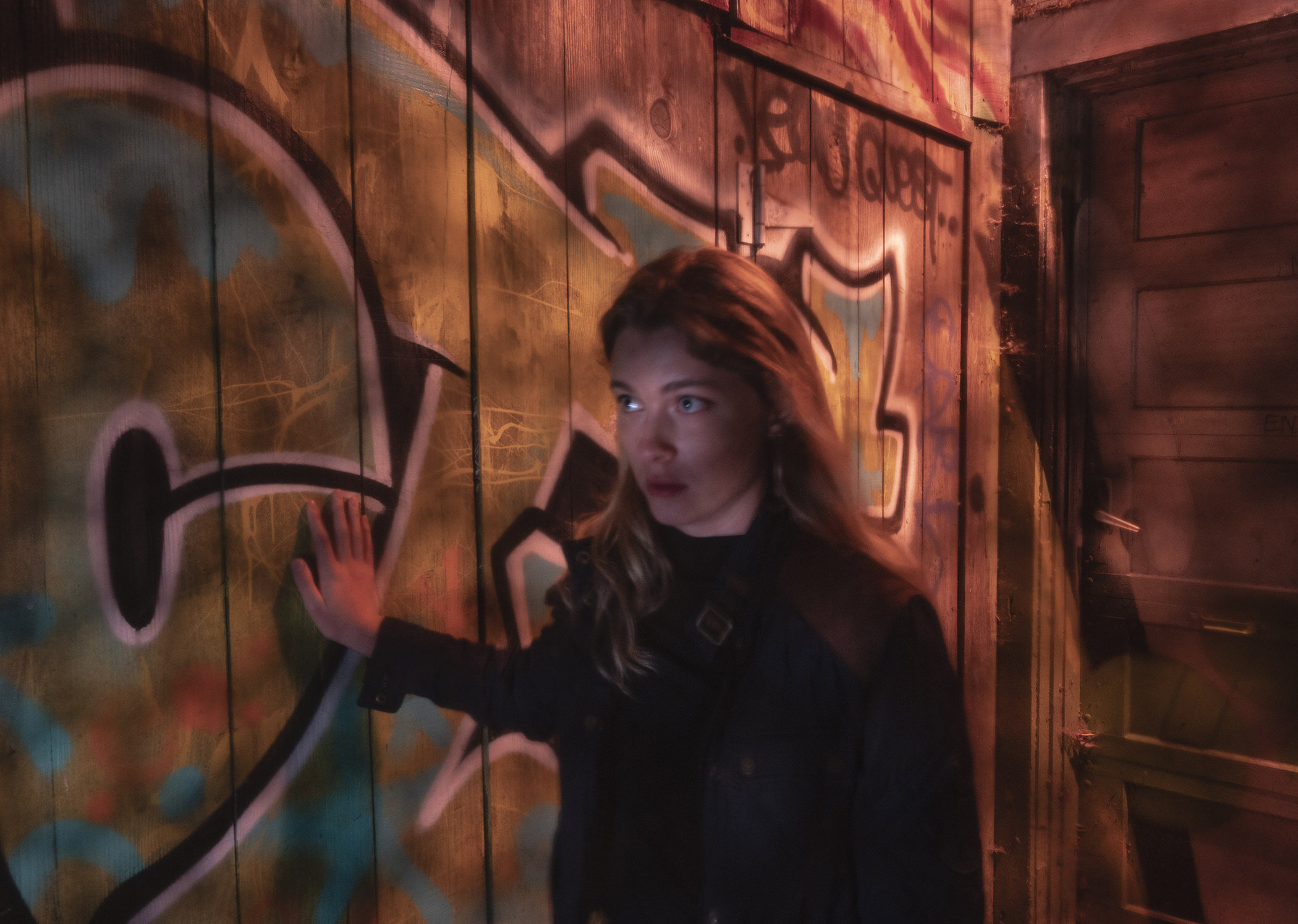
In May 2019, my image She Heard Footsteps from the series Unrealized (above, left) was included in Portraiture: Through the Lens, a juried group show at Black Box Gallery, in Portland, Oregon.
In April 2019, four images from Unrealized appeared in a Bay Area Photographers Collective group show at KYOTOGRAPHIE (KG+) in Japan.
2018
In December, 2018, my image The Office, was named a winner in a juried competition by The Photo Review.
Also, in December, 2018, three images from my series Extensions were included in a juried group exhibition called “Advanced,” in California State Sen. Scott Wiener’s San Francisco office. The three images were Patchwork (above, right), Industrious and Canned Heat.
In September, 2018 my image Sublimation was included in Photo Shoot: 2018, a juried group show at Black Box Gallery in Portland, Oregon.
In 2016, I participated in my first two public exhibitions.